

The shoulder blades are two flat, triangular bones on each side of the top of your back. They are connected to the upper arm bones (humerus), collar bones (clavicle) and the muscles of the upper back, neck and arm.
What causes shoulder blade pain?
Pain in the shoulder blades can be caused by bad posture, psychological stress, shoulder overuse, injuries, pinched spinal nerves, lung diseases and disorders of other chest and abdominal organs.
The following conditions typically, but not exclusively, cause pain only in the right or only in the left shoulder blade or only between them:
-
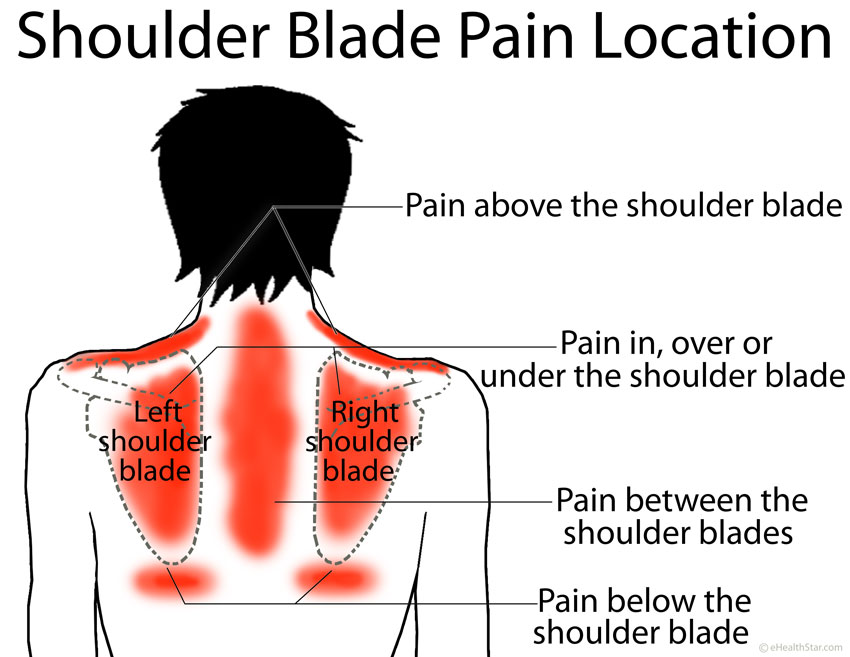
Picture 1. Shoulder blade pain location
RIGHT shoulder blade pain: gallstones, liver cancer, pelvic inflammatory disease, stomach ulcer, appendicitis, ovarian cyst, ectopic pregnancy
- LEFT shoulder blade pain: irritable bowel syndrome (IBS), heart, pancreas and spleen conditions
- Pain BETWEEN the shoulder blades: gastroesophageal reflux disease (GERD), esophageal spasms, ulcers or cancer, broken vertebra (in osteoporosis or bone cancer), T4 or upper thoracic syndrome, Hodgkin lymphoma, aortic dissection
Causes of Shoulder Blade Pain by Organ
I. MUSCLES of the upper back
II. TENDONS in the shoulder area
III. BONES: scapula and spine
IV. NERVES
V. CHEST organs: heart, lungs, aorta
VI. ABDOMINAL organs: gallbladder, ovary
VII. SHOULDER
I. MUSCLES
1. Poor Posture (Forward or Rounded Shoulders)
Rounded shoulders can result from the tight chest and weak upper back muscles, for example, due to a long-term desk job, and can cause pain in the shoulder blades [14]. Pain can be triggered by bending the head forwards.
2. Emotional Stress
Chronic emotional stress, anxiety or depression can result in an increased tension in your upper back muscles with burning or stabbing pain in the shoulder blades; the pain can be triggered by touching the chest with the chin, deep breathing or stretching the back muscles [56].
3. Myofascial Pain Syndrome
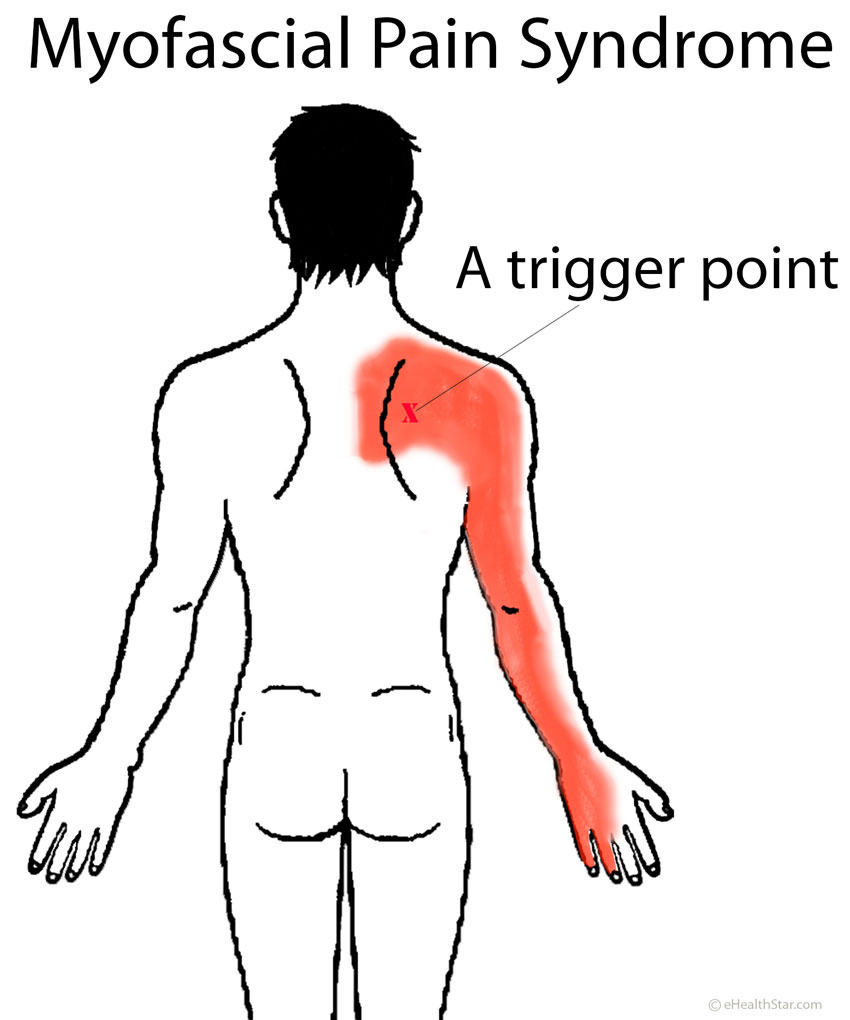 Myofascial pain syndrome is a chronic condition with palpable knots in the muscle sheaths (fascia) that act as trigger points. Snapping on the muscle knots in the shoulder blade area triggers muscle twitches at the site of the snap and deep aches in the shoulder, the back side of the arm, hand and little and ring finger (Picture 2) [18].
Picture 2. Myofascial pain syndrome: Applying pressure on a trigger point can cause pain over the shoulder blade that radiates down the arm.
Serratus Anterior Muscle Pain Syndrome
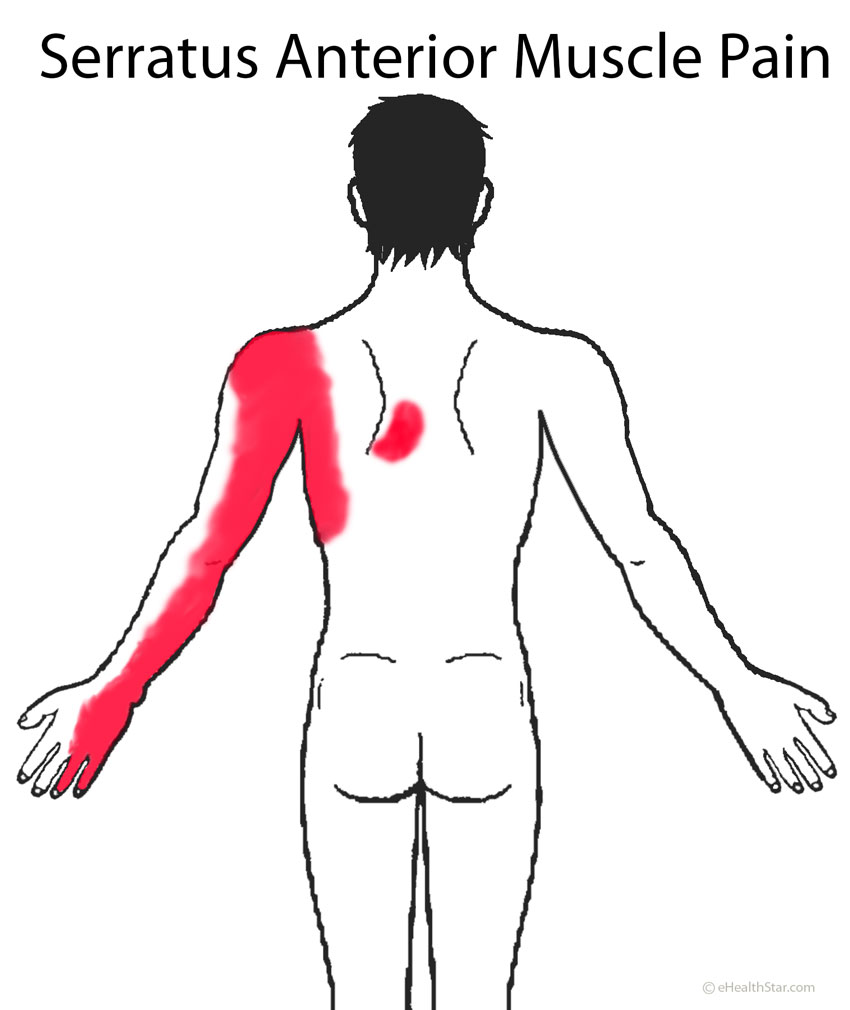 Overuse of the serratus anterior muscles on both sides of your chest, for example due to workout exercises (push-ups, bench presses), boxing, repetitive sprints or lifting heavy objects can result in pain at the bottom of the shoulder blades, below the armpits and on the inner sides of the arms, aggravated by deep breathing and moving the arms (Picture 3) [70].
4. Muscle Strain (Pulled Muscle) or Tear
Muscle strain refers to overstretching and muscle tear to a rupture of a muscle, such as during carrying a heavy backpack, reaching for something on a high shelf, push-ups, pull-ups, weightlifting (deadlift, bench press, squat) or similar activities. Symptoms include tenderness, pain and swelling in the shoulder blade area [35].
5. Muscle Contusion (Bruise)
Muscle contusion is a collection of the blood in a muscle (hematoma), usually caused by a direct blow or fall [4]. Symptoms include localized swelling, bruising (reddish-bluish discoloration), tenderness and pain.
6. Snapping Scapula Syndrome
Snapping scapula syndrome refers to snapping, grinding or popping sound during shrugging or lifting an arm sideways due to rubbing of the shoulder blade against the rib cage. Other symptoms can include palpable crepitus over the medial side of the scapula, and pain along the medial border of the shoulder blade when lifting the arm above the shoulder level [63].
Causes and risk factors include repeated overhead arm movements, like in swimming or throwing, weak upper back muscles and scapular dyskinesia [63].
7. SICK Scapula Syndrome
SICK scapula syndrome (scapular malposition, inferior medial border prominence, coracoid pain and malposition, and dyskinesis of scapular movement) includes [6]:
- Asymmetric shoulder blades and prominent inferior medial angle of the affected shoulder blade
- Pain in the shoulder blade area and upper outer part of the arm, aggravated by using the arm force against resistance
- Tenderness along the medial shoulder blade border
- Normal or slightly reduced range of shoulder motion
The syndrome can develop in overhead throwing athletes, such as baseball, tennis and water polo players, javelin throwers, shot putters and swimmers.
II. TENDONS
1. Whiplash – Neck Strain and Sprain
Whiplash is a strain or tear of the neck muscles, tendons or ligaments or even a damage of the spinal discs and nerves caused by a sudden neck movement backward and forward, most commonly in rear-end car accidents and motorbike falls. Symptoms can include [58]:
- Pain radiating from the neck toward the shoulder blades; the pain can be triggered by turning the head sideways
- Neck stiffness
- Dizziness and headache
2. Fibromyalgia

Fibromyalgia is a chronic condition with widespread dull musculoskeletal aches, tender points, fatigue, sleep, memory and mood issues. It occurs mainly in women, but also in men and children.
Typically, several symmetrical tender points can be found in various body parts, including the outer sides of the elbows (Picture 4) [13].
Picture 4. Tender points in fibromyalgia
III. BONES
1. Fractures
Shoulder blade fracture can occur during a fall on an extended arm or due to a direct hit to the shoulder blade. Symptoms can include:
- Sudden, extreme, sharp pain, and an audible click in the shoulder blade
- The pain that can radiate into the neck or upper arm and can be aggravated by moving an arm, firmly pressing on a shoulder blade or sleeping on the back [8]
- A visible deformity and swelling
Vertebral fractures are most common in older people with osteoporosis or spinal cancer and can be triggered by minor accidents or even by a hard cough [11]. Diagnosis can be confirmed by an X-ray.
2. Scapular Cancer
Bone cancer or the spread of a lung or other cancer into the shoulder blade can cause shoulder blade tenderness and pain, especially when sleeping on the back, fatigue, loss of appetite and weight.
IV. NERVES
1. Pinched Spinal Nerves
Pinched nerves arising from the neck spinal cord can cause burning and shooting pain and tingling:
- C4, C5 and C6 nerve roots: above the shoulder blade [2,62]
- C7 and C8 nerve roots: between the shoulder blades [2]
- C8 nerve roots: in the right or left shoulder blade area [2]
The pain can be triggered by bending the neck backward, turning the head sideways, or lying down. The pain can spread to the back of the neck and head or down the arm all the way to the fingers [21]. It can be relieved by placing a hand on the top of the head [7]. Common causes include bulging or herniated discs due to an injury, degenerative disc disease, spinal wear and tear (spinal osteoarthritis or spondylosis) [21]
Cervical spinal stenosis (compression of the spinal cord by a herniated disc) can cause pain in the shoulder blade area [24].
2. Shingles (Herpes zoster)
A reactivation of the chickenpox virus in the body can cause burning pain followed by red, itchy blisters in the form of a stripe that runs from the spine toward the front of the chest, usually only on one side [23]. The rash usually disappears within a month but the pain can persist for months.
3. Long Thoracic Nerve Injury (Winged Scapula)
The long thoracic nerve, which supplies the serratus anterior muscle, can be damaged by a direct blow to the side of the ribs, sustained bearing of heavy loads over the shoulder, deep massage or during removal of the lymph nodes in the armpit. Symptoms can include:
- Trouble lifting the arm on the affected side forward above the shoulder level
- A shoulder blade that sticks out
- Pain on the side of the chest, in the scapular area, shoulder and down the arm
Recovery time may be up to 2 years [30,42,60].
4. Thoracic Outlet Syndrome
A cervical rib (an abnormal pair of ribs above the first pair of ribs) can press on the nerves of the brachial plexus at their exit from the thorax to an arm and cause pain, numbness, pins and needles in the shoulder blade and pain, coldness and weakness in an arm or fingers. The symptoms are aggravated by raising an arm above the shoulder, for example, during combing the hair [20].
V. CHEST ORGANS
1. Gastric Reflux
Gastro-esophageal reflux disease (GERD) and bile reflux symptoms can include:
- Heartburn — a burning sensation behind the breastbone
- Pain between the shoulder blades that tends to be worse after eating, especially when lying down after a meal
- Sour or metallic taste in mouth [46]
2. Pleurisy
Pleurisy is an inflammation of the lung membrane (pleura) caused by a viral infection, such as flu, bacterial infection, such as pneumonia, cancer, drugs, etc. [43]. Symptoms may last from few days to 2 weeks or more and can include stabbing pain on one or both sides of the chest or upper back that is worse during breathing in, coughing and sneezing [43].
3. Pneumothorax
Pneumothorax–a rupture of the lung membrane that results in the collapse of the lung, usually on one side–can cause sudden knife-like pain on one side of the chest, followed by vague pains around the chest and shoulder blades, worsened by breathing, coughing and moving the arms [44].
4. Coronary Heart Disease and Heart Attack
The risk of coronary heart disease increases in men after 45 and in women after 55 [33]. Typical symptoms include:
- Sudden, heavy, burning pain behind the breastbone (angina) and shortness of breath aggravated by exercise, stress, cold or heavy meal and relieved by rest or the analgesic nitroglycerin, and lasting for less than 5 minutes
- The pain can radiate to the neck, jaw, into the left or both shoulder blades or down the inner side of the left arm to the fingers [32].
Pain from a heart attack is similar to angina but much stronger and longer (>15 minutes); in men can radiate to the neck, chin, left shoulder and down the left arm and in women into the neck, chin, both shoulder blades or arms [34].
5. Pericarditis
Pericarditis is an inflammation of the heart sac. It can cause sharp, stabbing pain behind the breastbone that can radiate to the left shoulder blade; other symptoms include dry cough and low-grade fever [36].
VI. REFERRED PAIN FROM THE ABDOMINAL ORGANS
Disorders of abdominal organs that irritate the diaphragm (the flat muscle between the chest and abdominal cavity) can cause pain in the left or right shoulder. This occurs because the phrenic nerve, which conducts sensory stimuli from the diaphragm, and the nerves that conduct sensory stimuli from the shoulders, convey the information to the brain via the same pathways, so the brain can wrongly interpret the pain origin [27]. Sometimes, only shoulder pain without abdominal pain is present [5]. Referred shoulder pain is not aggravated by shoulder movements [15].
1. Trapped Gas
In individuals with irritable bowel syndrome or constipation, trapped gas in the part of the colon near the spleen can cause pain on the left side of the upper abdomen, chest and left shoulder (splenic flexure syndrome); the pain is constant, can be severe and can last for several hours [1].
After laparoscopy (an endoscopic investigation of the abdominal cavity) or hysteroscopy (an endoscopic investigation of the uterus), some of the gas that has been insufflated into the abdominal cavity during the procedures can get trapped under the diaphragm and cause sharp pain in one or both shoulder blades. The pain can last for few days; laying flat can relieve pain [52,53]. After the colonoscopy, a pain in the left shoulder blade is common [54].
2. Gallbladder Disease
Gallstones with or without acute inflammation of the gallbladder (cholecystitis) can cause “biliary colic” with [47,48,49]:
- Sudden, severe pain below the rib cage on the right side persisting from few minutes to several hours, which often appears after eating and can radiate to the right flank or beneath or below the right shoulder blade or to the right shoulder tip
- Other symptoms, such as nausea, vomiting or fever
Gallstones in the common bile duct can present with additional symptoms, such as jaundice, pale and smelly stools and dark urine [50]. Gallbladder dyskinesia and sphincter of Oddi dysfunction can cause similar pain, which can persist after a gallbladder removal [51].
3. Irritation of the Diaphragm
In peritonitis (inflammation of the abdominal membrane), pus can collect beneath the diaphragm (subphrenic abscess) and cause severe abdominal pain and tenderness, pain at the tip of the shoulder blade and fever [67].
Ruptured ectopic pregnancy with abdominal bleeding can cause a sudden, sharp pain in the lower left or right abdomen and at the tip of the shoulder blade [64].
A ruptured ovarian cyst can cause lower right or left abdominal pain and pain at the tip of the shoulder blade [68].
In endometriosis, abdominal pain and the pain at the tip of the shoulder blade can be worse during ovulation and period [3,17].
VII. SHOULDER PAIN
Common conditions that can cause pain in the shoulder and shoulder blade include:
- Rotator cuff tears
- Shoulder sprain (separation), dislocation, subluxation or instability
- Trapezius myalgia
- Supraclavicular nerve entrapment
- Polymyalgia rheumatica
- Polymyositis and dermatomyositis
- Lung cancer [41]
- Osteonecrosis of the humeral head
How to treat shoulder blade pain?
Rest
In an early, painful phase of a shoulder or shoulder blade injury, shoulder rest prevents further damage.
Ice Packs
To reduce pain, swelling or bruising, put ice in a plastic bag, wrap it in a cloth and hold over the painful area for up to 20 minutes, several times a day.
Heat Pads
Heat pads can help relieve pain in myofascial pain syndrome due to increased tension of the upper back muscles.
Dry Needling
Dry needling can help in myofascial pain syndrome, but the effect is temporary.
Vapocoolant Spray
Vapocoolant spray can reduce the pain in muscle strain or bruise and before myofascial pain release.
A Sling or a Shoulder Brace
A sling prevents the motion of the shoulder blade and shoulder and encourages their healing after a fracture, dislocation, rotator cuff injury or surgery. A doctor can prescribe a shoulder brace in shoulder joint instability and impingement syndrome [28].
Scapular Stretching (Retraction) Exercises
Shoulder blade exercises are intended to relieve pain due to the tension of the upper back muscles or to prevent stiffness of the shoulder joint after injury. Do not exercise immediately after an injury or when you have severe pain.
Drugs
- Non-steroidal anti-inflammatory drugs (NSAIDs), such as ibuprofen, can be used to relieve mild to moderate pain.
- Muscle relaxants can help in muscle spasms near the spine caused by a herniated disc.
- Steroids can be used to treat inflammation in disorders, such as polymyalgia rheumatica [16] and polymyositis [31]
Surgery
Surgical treatment may be needed for pinched nerves, broken shoulder blade and snapping scapula syndrome.
- References
- Shafar J, 1965, The splenic flexure syndrome Europe PubMed Central
- Tanaka Y et al, 2006, Cervical roots as origin of pain in the neck or scapular regions PubMed
- Ovulation pain Better Health Channel
- Muscle contusion (bruise) American Academy of Orthopaedic Surgeons
- Söyüncü S et al, 2012, Traditional Kehr’s sign: Left shoulder pain related to splenic abscess Turkish Journal of Trauma & Emergency Surgery
- Comprehensive Approach to the Management of Scapular Dyskinesia in the Overhead Throwing Athlete University of Pittsburgh, Department of Physical Medicine & Rehabilitation
- Rodway I, Cervical radiculopathy (pinched nerve) OrthoInfo
- Scapula fracture PhysioAdvisor
- Fracture, scapula MDGuidelines
- Rib fracture, clinical presentation Emedicine
- Vertebral fracture Emedicine
- Treating osteoporotic fractures of the spine Harvard Medical School
- Questions and Answers about Fibromyalgia National Institute of Arthritis and Musculoskeletal and Skin Diseases
- Common posture mistakes and fixes NHS Choices
- Neck pain referred to the shoulder ShoulderDoc
- Polymyalgia rheumatica American College of Rheumatology
- Freeston JE et al, 2006, Chronic shoulder pain and diaphragmatic endometriosis Rheumatology
- Giamberardino MA et al, 2011, Myofascial pain syndromes and their evaluation Best Practice & Research in Clinical Rheumatology
- Lymphodenopathy Clinical Presentation Emedicine
- Mackinnon SE et al, 2001, Thoracic outlet syndrome Washington University in St. Louis, School of Medicine
- Cervical spondylosis MedlinePlus
- Sanders RJ, 2008, Thoracic outlet syndrome E.Central
- Shingles symptoms Mayo Clinic
- Cervical spinal stenosis Houston Methodist
- Chu JC et al, 2002, The Effect of a Neoprene Shoulder Stabilizer on Active Joint-Reposition Sense in Subjects With Stable and Unstable Shoulders PubMed Central
- Weise K et al, 2004, Effectiveness of Glenohumeral-Joint Stability Braces in Limiting Active and Passive Shoulder Range of Motion in Collegiate Football Players PubMed Central
- Moore KL et al, 2013, Clinically Oriented Anatomy, 7th Edition
- Walther M et al, 2004, The subacromial impingement syndrome of the shoulder treated by conventional physiotherapy, self-training, and a shoulder brace: results of a prospective, randomized study PubMed
- Perry L, 2013, Pectoralis Minor Trigger Point: The Annoying Little Brother Triggerpointtherapist.com
- Wiater JM et al, 1999, Long thoracic nerve injury PubMed
- Dermatomyositis Muscular Dystrophy Association
- Coronary artery disease RXmed
- Who Is at Risk for Coronary Heart Disease? National Heart, Lung and Blood Institute
- Heart Attack Symptoms and Warning Signs John C. Lincoln Health Network
- Rhomboid muscle pain HealthGuidance
- Pericarditis symptoms Mayo Clinic
- Aortic dissection The Merck Manual, Home Edition
- Pancoast syndrome, clinical presentation Emedicine
- Paget’s disease LearningRadiology.com
- Referred shoulder pain WebMD
- Lung cancer symptoms WebMD
- Suri M, Long thoracic nerve palsy MistySuriMD.com
- Pleurisy Mayo Clinic
- Pneumothorax Patient.info
- Layke JC et al, 2006, Esophageal Cancer: A Review and Update American Family Physician
- Understanding Gastroesophageal Reflux Disease (GERD) — Symptoms WebMD
- Signs and symptoms of gallbladder problems Everydayhealth
- Gallstones symptoms NHS Choices
- Gallstones symptoms Mayo Clinic
- Herrine SK et al, Jaundice in adults Merck Manual
- Management of biliary dyskinesia University of Wisconsin School of Medicine and Public Health
- Macksey L, 2012, Surgical Procedures and Anesthetic Implications
- Gianninoto A et al, 2003, Diagnostic hysteroscopy in abnormal uterine bleeding. Five-years’ experience PubMed
- Simon EJ Janes et al, 2005, A life threatening complication after colonoscopy PubMed Central
- Acute pancreatitis Healthline
- Tension headache MedlinePlus
- Pancreatic cancer Healthtalk
- Whiplash symptoms NHS Choices
- A guide to your liver biopsy Derby Hospitals
- Winging scapula ShoulderDoc
- Tsui JI et al, 2012, Chronic Pain and Hepatitis C Virus Infection in Opioid Dependent Injection Drug Users PubMed Central
- Jackson R, 2010, The Classic: The Cervical Syndrome PubMed Central
- Merolla G et al, 2013, Snapping scapula syndrome: current concepts review in conservative and surgical treatment PubMed Central
- Ectopic pregnancy symptoms NHS Choices
- Referred pain Anatomy Notes
- Fitz-Hugh Curtis syndrome Patient.info
- Subphrenic abscess Universitäts Klinikum Bonn
- Ovarian cyst Emedicinehealth
- Scapular exercise: retraction WebMD
- Serratus Anterior Muscle Pain And Trigger Points Painotopia.com
498 Responses to Shoulder Blade (Scapula) Pain